What Does Terra Rossa Mean?
3 July 2026
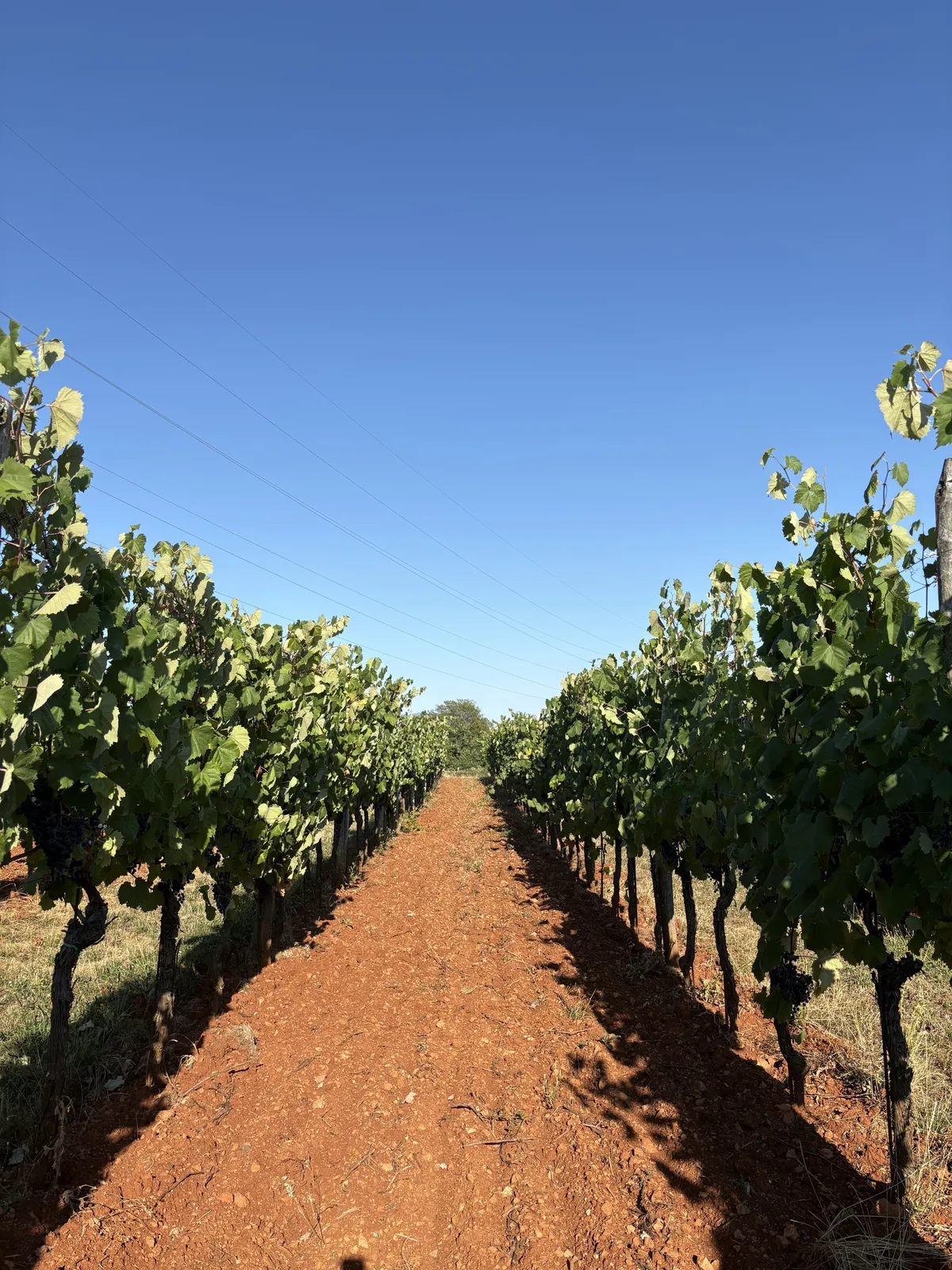
Anyone who has ever walked the Karst has surely noticed the reddish earth among the grey limestone rocks. That soil has a name — terra rossa — and it's one of the key reasons Karst wines have such a distinctive character.
How terra rossa forms
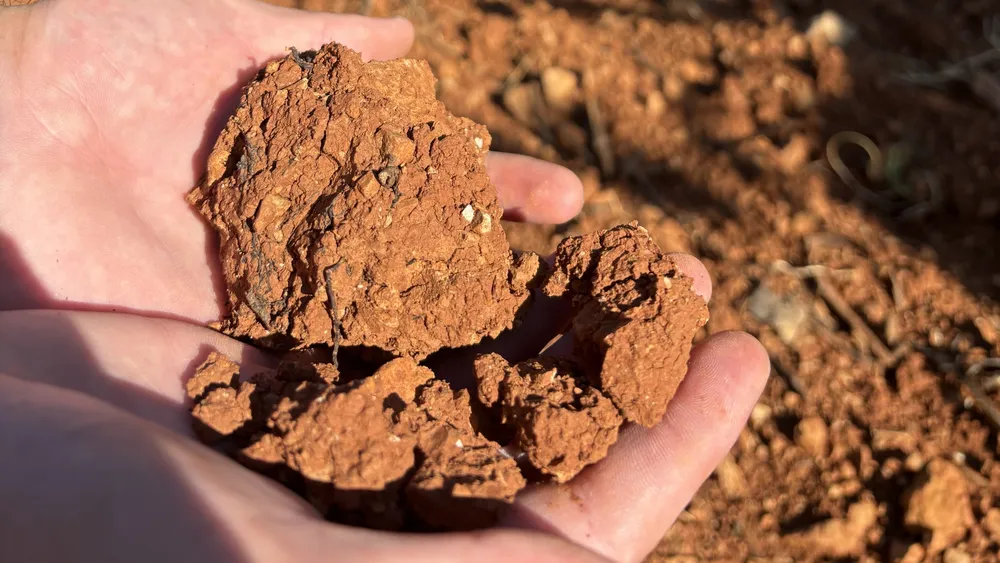
Terra rossa literally means "red earth." It forms as a result of the long-term dissolution of limestone in a Mediterranean climate, where dry and wet periods alternate. As water slowly dissolves the limestone bedrock, most of its mineral content is washed away, leaving behind insoluble residue — chiefly iron and aluminium oxides. It's the iron oxides that give the soil its characteristic reddish to brown colour.
This process takes a very long time — terra rossa isn't soil that forms in a few years, but the result of geological processes that play out over millennia.
Why it matters for the vine
On the Karst, terra rossa doesn't cover the ground evenly; it appears in pockets and fissures among the exposed limestone rock. That means the layer of soil is often shallow, and the vine has to send its roots deep to find water and nutrients.
For the vine, this brings a few important consequences: deep rooting gives it access to water even in dry periods; shallow soil limits yield, which often means more concentrated grapes; the limestone bedrock beneath the terra rossa contributes to the wine's minerality; and the red soil warms quickly, which helps the grapes ripen in the Karst's relatively short season.
Terra rossa as part of the Karst story
Terra rossa is just one part of the Karst equation — alongside it, limestone, the bora wind and a dry, warm climate also shape the wine's character. Together they create an environment that's demanding for the vine, but it's precisely this demanding nature that produces wines with real character.
At Vina Durcik, our vineyards lie on exactly this kind of soil, around Pliskovica. For us, terra rossa isn't just a geological term, but the ground we walk on every day.
Curious how all these factors come together to shape our wines? Read more on our Karst page.
Frequently asked questions
Why is terra rossa red?
Its colour comes from iron oxides that remain in the soil as limestone dissolves over time and loses its other mineral content. A similar process happens anywhere there's a limestone bedrock and a Mediterranean climate with alternating dry and wet periods.
Is terra rossa unique to the Karst?
No, this kind of soil forms anywhere limestone dissolves under similar climatic conditions — for example in Istria, parts of Italy and Greece. On the Karst, though, terra rossa is especially distinctive because of its combination with stone, the bora wind and a dry climate.