Terroir
Wine from the Karst
The Karst is our home and part of our tradition. It's a landscape where terra rossa, limestone and the bora wind play an important role in the life of people and vineyards alike — as true today as it was generations ago.
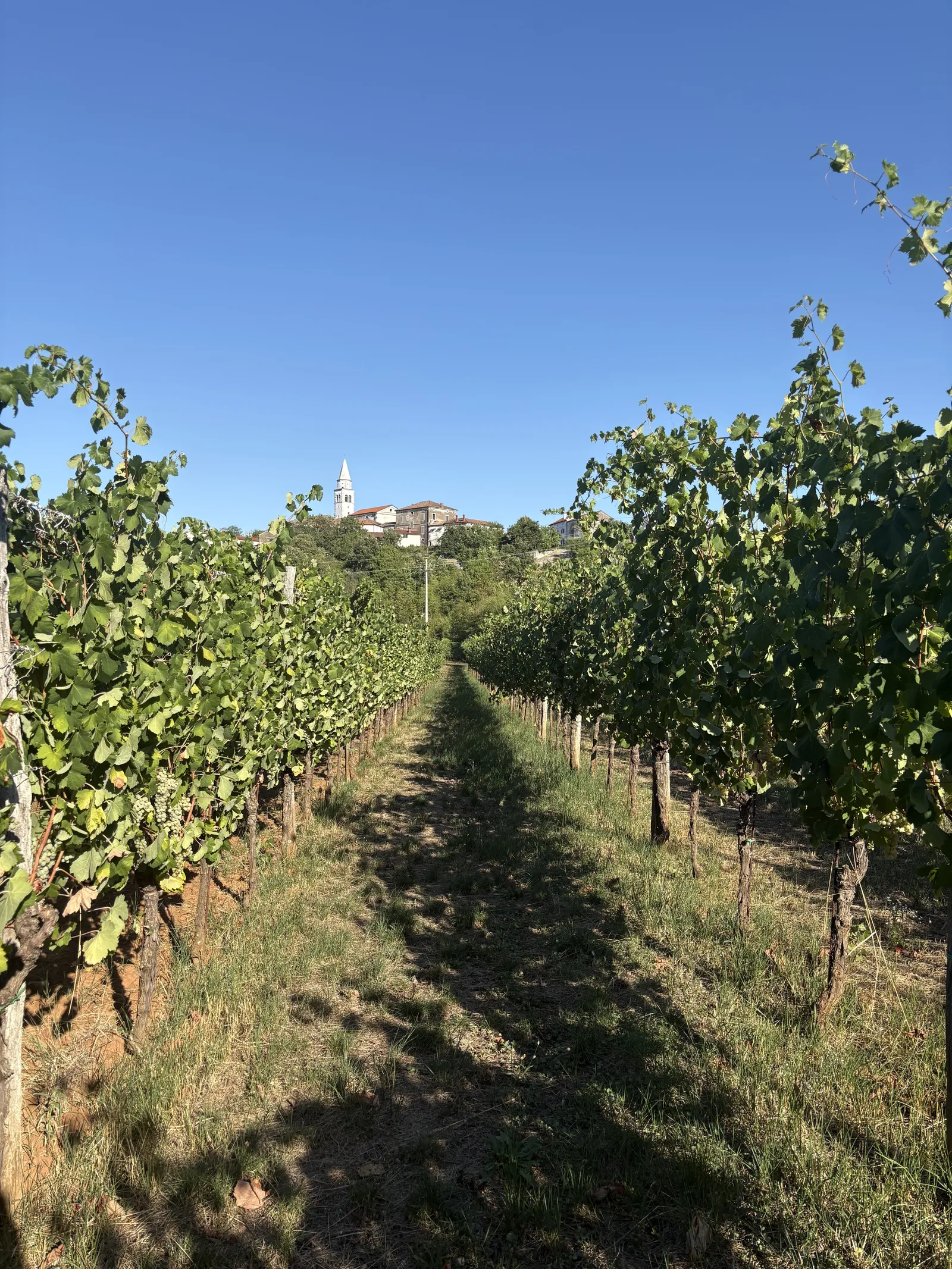
Our vineyards lie around Pliskovica, right in the middle of this landscape. The vines grow in typical Karst soil — red earth over limestone — enclosed by dry-stone walls built by the hands of our ancestors. For us, the Karst isn't just a location on a label — it's the environment we live, work and make wine in.
Terra rossa and limestone
Karst soil is an important part of the environment our vines grow in.
The Karst is known for its red soil, or terra rossa, which forms as limestone slowly dissolves over millennia, leaving iron oxides behind — these give the soil its characteristic reddish colour. Terra rossa doesn't cover the ground evenly; it appears in pockets and fissures in the limestone, so our vines' roots have to reach deep to find water and nutrients.
That very search deep among the limestone is what later contributes the minerality Karst wines are known for.
The combination of soil, climate and the bora wind gives the vineyards demanding but interesting growing conditions. Karst wines are tied to this environment and its characteristics — official Slovenian sources, too, highlight the influence of terra rossa, the bora and the Mediterranean climate on the character of Karst wines.
The bora wind
The bora is one of the most recognizable elements of the Karst — a strong, gusting wind that can exceed 100 km/h and leaves no doubt, in the vineyard, about who sets the pace of work.
In the vineyards it keeps the environment drier — after rain it quickly dries the leaves and grapes, which helps limit or slow the conditions disease needs to develop. Less moisture means less need to intervene, which fits the approach we've worked with on the Karst for generations.
For a winegrower, this also means a different way of working and adapting to the characteristics of the Karst environment.
The bora is part of our vineyards' everyday life — just like the limestone, the red earth and the dry Karst climate.
A dry, warm Karst climate
The Karst has a dry, warm, Mediterranean-tinged climate, kept more dynamic by the bora than you might expect this close to the sea.
These conditions favour the ripening of the grapes, while together with the Karst soil and the bora they create an environment where wines with character are made. Summers are hot and dry, and by late summer the nights cool noticeably — that difference helps the grapes keep their freshness and acidity, even once fully ripe.
In our wines, we want to preserve that character, not mask it with unnecessary intervention.
The Karst is more than wine
The Karst is a landscape worth getting to know beyond the cellar, too.
A visit lets you discover, alongside the wine, Karst cuisine, nature and the underground world — from the caves and sinkholes that gave the whole field of karst science its name, to the dry-stone walls that still mark out vineyards and pastures today, to Karst prosciutto and other cured meats born of the same dry climate and the same wind as our wines.
For us, wine is part of a broader Karst story — a story about the land, tradition, food and life on the Karst.
Curious about a specific part of the Karst landscape? Read What does terra rossa mean?, Why does the bora wind matter for wine? and What is Vitovska?, or see what to visit on the Karst.