How Does Macerated Wine Come About?
17 July 2026
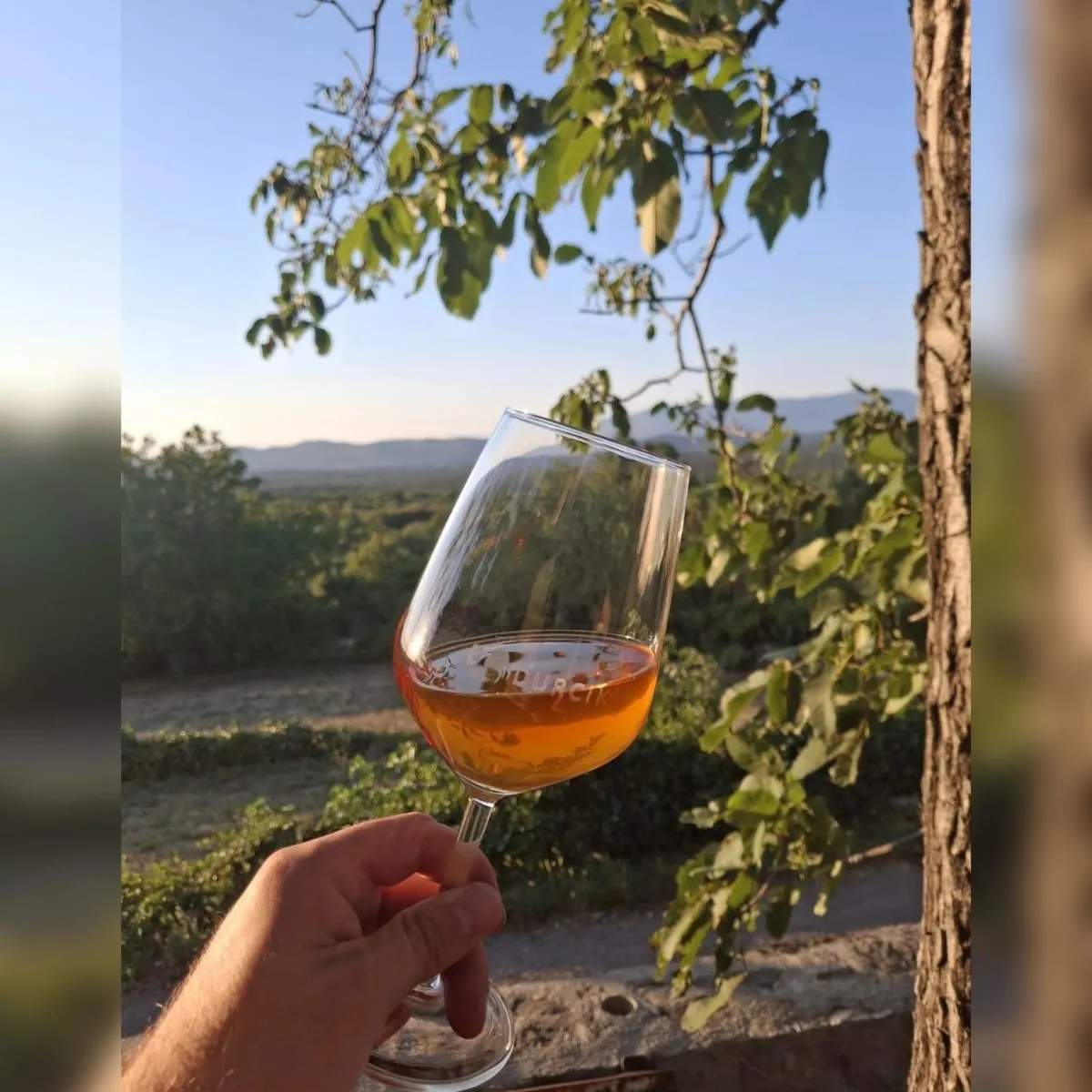
Among white wines, there's one group that stands out from the average in both look and taste — macerated wines, often also called orange wines. Their deeper colour and more pronounced structure aren't a coincidence, but the result of a specific production method.
The basic difference: skin contact
In classic white winemaking, the grapes are pressed and the juice is separated from the skins, seeds and stems as quickly as possible — the goal is juice that's as fresh, clean and aromatic as possible, which then ferments on its own.
With macerated wine, the process is different: after pressing, or even before it, the grape juice stays in contact with the skins — the same as is normal for red wine. This contact can last anywhere from a few days to a few weeks, and in rare cases even longer.
What happens during maceration
While the juice and skins stay together, various compounds pass from the skins into the juice: colour compounds that give the juice a deeper gold to amber colour; tannins that add structure and a slight bitterness, similar to red wine; additional aromatic compounds that contribute complexity; and, in natural production, often wild yeast present on the skins, which can trigger spontaneous fermentation.
The result is a wine that, compared to classic white wine, has more structure, texture and often tannins that are barely noticeable in ordinary white wines.
Why producers choose to macerate
Maceration isn't a modern trend, but one of the oldest approaches to winemaking, known long before the invention of modern, cold cellar technology. Today it's mainly producers who bet on minimal intervention who return to it, wanting the wine to show the character of the variety and the place as much as possible on its own.
Some white varieties, such as Vitovska, have a relatively neutral varietal scent and a thick skin — which makes them especially well suited to this approach, since the skin contributes exactly the structure and complexity the variety might otherwise lack on its own.
Maceration at Vina Durcik
We macerate all of our white wines — Vitovska and Teja. Maceration lasts 9 to 14 days, fermentation happens spontaneously, without added yeasts, and the wine then ages in wooden barrels. We don't add sulfites and we don't filter the wine, which means every bottle reflects what happened in that particular vintage — with no attempt to make the result uniform.
Curious what this looks like for a specific wine? See the Vitovska and Teja pages, or read What Is Vitovska?
Frequently asked questions
Is macerated wine the same as orange wine?
In practice, yes — the term "orange wine" became common for macerated white wines precisely because of the colour they take on from skin contact.
Is maceration a new technique?
No, it's one of the oldest ways of making wine, used centuries before modern, cold, reductive cellar technology became the norm.